
OUR MISSION IS TO TAILOR FOR EACH CLIENT A BEAUTIFUL, FUNCTIONAL AND ENDURING OUTDOOR ENVIRONMENT THAT WILL PROVIDE A PLACE OF SERENITY FOR FRIENDS AND FAMILY TO APPRECIATE FOR YEARS TO COME.

BuildCal Landscape Landscape Design & Outdoor Living Article
Mosquitoes and Flies Ruining Your Patio? Landscaping and Design Fixes That Help
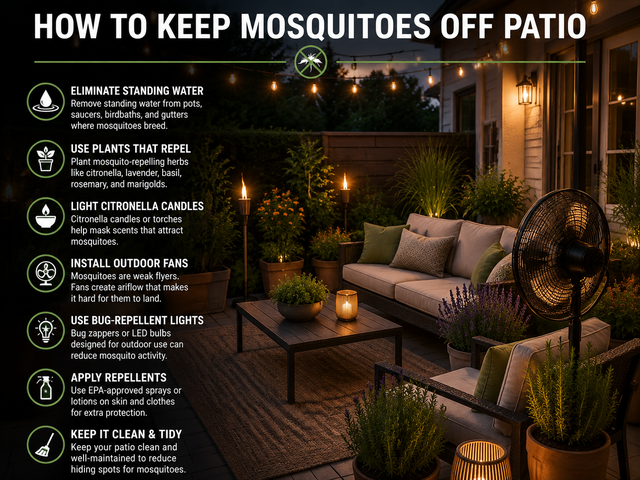
You spray, you light a citronella candle, you swat — and the mosquitoes keep coming back to the same patio every evening. That is usually a sign the problem is not on the surface; it is in the yard. Mosquitoes breed in standing water, and even a plant saucer, a folded furniture cover, or a low corner that stays wet after irrigation can keep a seating area buggy no matter how much you spray. Learning how to keep mosquitoes off patio areas starts with finding and correcting those water sources, then improving airflow, reducing damp hiding places, and choosing plants and hardscape that make the space easier to keep clean. This guide walks through the drainage, planting, fan, and hardscape fixes that reduce the attractants you can actually control — while being honest that no yard can promise a completely bug-free result, since insects travel from neighboring properties too.
How to Keep Mosquitoes Off the Patio
The most effective landscape-based approach is to eliminate standing water, correct drainage and irrigation problems, improve airflow, keep vegetation managed, and place seating away from damp or shaded pockets. Empty containers, saucers, buckets, clogged drains, and low areas can support mosquito activity. Fans may make a seating area less comfortable for flying insects, while planting can add useful fragrance and habitat value, but neither is a substitute for water management.
Why Do Mosquitoes and Flies Gather Around a Patio?
Mosquitoes need moisture, and even a small amount of trapped water can become a concern. Check plant saucers, children's toys, uncovered bins, decorative containers, clogged gutters or drains, low spots, irrigation overspray, and areas beneath outdoor furniture. Flies may also be attracted by food, pet waste, trash, decomposing plant material, or wet organic debris. The first step is to observe where insects appear and what conditions exist there.
How Do You Stop Standing Water Mosquitoes at the Source?
Standing water mosquitoes are best addressed by identifying and removing water-holding locations. Walk the property after irrigation and after rain, then inspect the patio, planting beds, side yards, roof drainage, downspouts, drains, pots, furniture covers, and storage areas. Even small containers or folded covers can hold water longer than expected.
BuildCal's guide to patio drainage solutions in Southern California provides related guidance on water pooling. A drainage problem should be assessed before adding more soil, mulch, plants, or a new patio finish that could hide the cause.
What Does Drainage Mosquito Control Involve?
Drainage mosquitoes are not solved by installing a drain in every wet area. A site-specific plan should first identify the source, direction, volume, and frequency of water. Roof runoff and irrigation require different responses from a low patio corner or water moving from a neighboring property. Understanding why water collects and where grading should send it is the starting point before choosing a fix.
Possible landscape improvements include adjusting grades, extending downspouts, installing a properly located drain, improving inlets, selecting a permeable or jointed surface where appropriate, and keeping outlets clear. The system must direct water to an approved location without creating erosion, nuisance runoff, or a new wet area. Requirements can vary by city, project scope, property, and HOA, so confirm approvals before construction.
Can Plants That Repel Bugs Help a Patio?
The phrase plants that repel bugs is often used for aromatic herbs and ornamentals, but plants should not be treated as a guaranteed mosquito barrier. Fragrance may be noticeable to people without reliably preventing insects from entering a yard. Plant location, plant health, water management, and maintenance generally matter more than relying on one species.
A diverse, water-wise planting palette can support a more comfortable outdoor space by reducing bare dust, improving visual separation, and making irrigation more deliberate. BuildCal's landscaping services in Los Angeles and nearby communities can coordinate planting, lawns, irrigation, soil, grading, drainage, and maintenance around the patio.
Do Patio Fans Help With Bugs?
Searches for patio fan bugs usually reflect a practical question: can moving air make an outdoor seating area less attractive or less comfortable for flying insects? A properly sized fan may improve comfort and air movement in a covered patio or outdoor room, but it will not remove standing water, correct drainage, or prevent every mosquito and fly from entering.
How Can Hardscape Design Make a Patio More Comfortable?
Hardscape can reduce contact with muddy soil, define seating away from planting beds, and create surfaces that are easier to sweep and clean. Pavers, concrete, decomposed granite, steps, retaining edges, and paths should be selected with slope, joints, drainage, access, heat, and maintenance in mind — comparing how patio materials perform for cleaning and slip helps match the surface to a low-maintenance seating area.
BuildCal's hardscape services can support patios, walkways, drainage-related improvements, retaining elements, and outdoor-living layouts. The appropriate scope depends on the existing surface, base, grade, utilities, access, and intended use.
What to Check Before You Start a Bug-Reducing Patio Project
- Walk the property after watering: Mark puddles, damp edges, overspray, leaks, and areas that stay wet.
- Inspect water-holding objects: Check pots, saucers, toys, bins, furniture covers, drains, gutters, and storage containers.
- Review the patio grade: Look for settlement, cracks, low corners, clogged inlets, and water moving toward the home.
- Reduce dense hiding places: Prune overgrown vegetation and keep seating, walls, and fences accessible for cleaning.
- Choose planting carefully: Use plants suited to the sun, soil, water, mature size, and maintenance capacity; do not rely on bug-repellent claims alone.
- Plan airflow: Consider fan placement, shade structures, walls, gates, furniture, lighting, and electrical access.
- Control organic debris: Remove fallen leaves, pet waste, food residue, and material collecting near drains or seating.
- Confirm construction needs: Check city, drainage, electrical, property, and HOA requirements before adding structures or changing grade.
Which Landscape Fix Fits the Insect Problem?
| Project type | Typical scope of work | Permit or HOA approval usually required? | Key considerations |
|---|---|---|---|
| Water-source correction | Inspect irrigation, downspouts, drains, low spots, leaks, and runoff; adjust, repair, or regrade as needed | Depends on grading, drainage discharge, property, and HOA rules | Find the cause before covering the wet area or adding more planting |
| Patio or path improvement | Repair or replace a surface, improve edges, correct transitions, and coordinate drainage and planting | Varies with demolition, grade, structures, drainage, and local requirements | Stable, cleanable surfaces can reduce mud and make maintenance easier |
| Planting adjustment | Prune, relocate, replace, or redesign beds; add suitable irrigation, mulch, and access | Usually depends on trees, walls, grading, and HOA requirements | Avoid dense damp cover and choose plants for the actual site, not claims alone |
| Airflow or shade upgrade | Coordinate fans, pergolas, shade structures, lighting, furniture, and electrical access | May apply to structures, electrical work, setbacks, and HOA rules | Improves comfort but does not replace drainage or sanitation work |
What Mistakes Keep a Patio Buggy?
The first mistake is treating insects as a spray-only problem while leaving water sources untouched. Another is adding mulch, plants, or decorative containers to a wet area without improving drainage. A new patio surface can also fail to help if it slopes toward the house or traps debris along its edges — mapping grading and drainage across the yard first prevents rebuilding the same wet spot.
How Do You Choose a Patio Contractor in Glendale?
Choose a licensed contractor who will investigate the site instead of promising a completely mosquito-free result. Ask whether the proposal addresses standing water, irrigation, drainage, patio condition, plant maturity, access, shade or fan coordination, cleaning, and maintenance. Request comparable before-and-after documentation, itemized pricing, realistic timing, and clarity about any city, electrical, or HOA responsibilities.
BuildCal Landscape has served Glendale, Los Angeles, and surrounding Southern California communities since 2012. The founder has a bachelor's degree in landscape architecture from Cal Poly Pomona and prior project-management experience. Final scope and pricing are confirmed after a consultation or site visit, with optional ongoing landscape maintenance after installation.
How BuildCal Landscape Helps Reduce Patio Bug Problems
BuildCal can coordinate the landscape and hardscape elements that influence outdoor comfort: drainage, grading, irrigation, patios, walkways, planting, lawns, artificial turf, shade structures, lighting, and maintenance. The goal is to reduce controllable attractants and make the yard easier to inspect, clean, and use.
Steps to Start Your Outdoor-Comfort Project With BuildCal
- Schedule a consultation or site visit. Describe when mosquitoes or flies appear, where people sit, and what water or maintenance issues you have noticed.
- Assess the site. Review soil, drainage, irrigation, sun, airflow, patio grade, planting, roof runoff, utilities, structures, and access.
- Develop a design concept and quote. Compare drainage work, hardscape repairs, planting adjustments, fans or shade, cleaning access, timeline, and pricing.
- Confirm approvals. Identify any city, drainage, electrical, property-line, structural, or HOA requirements before work begins.
- Install and maintain. Complete the improvements, review water and cleaning routines, and arrange an optional ongoing maintenance plan.
Frequently Asked Questions About Patio Mosquito Control
How Can I Keep Mosquitoes Off My Patio Naturally?
To learn how to keep mosquitoes off patio areas naturally, begin with water management rather than relying on a single spray or plant. Empty containers and saucers, correct irrigation overspray, clear drains, inspect downspouts, and address low areas. Improve airflow, keep vegetation pruned, and place seating away from damp pockets. These steps can reduce controllable attractants, but they cannot guarantee that mosquitoes will never enter from nearby properties.
What Attracts Standing Water Mosquitoes to a Backyard?
Standing water mosquitoes may be associated with containers, plant saucers, toys, bins, furniture covers, clogged drains, irrigation leaks, roof runoff, and low areas that remain wet. Walk the property after watering and after rain, then remove or empty items that hold water. If water is collecting beside the patio or foundation, have the grade, drainage, and irrigation reviewed before covering the area with soil, mulch, or a new surface.
Do Plants That Repel Bugs Really Work?
Plants that repel bugs may provide fragrance or visual value, but they should not be treated as a guaranteed barrier against mosquitoes or flies. Their effect depends on the plant, location, health, airflow, water, and how insects enter the property. Use suitable plants as one part of a broader plan that includes drainage, irrigation control, sanitation, pruning, hardscape, and maintenance. Avoid placing dense or overwatered beds beside seating.
Can a Patio Fan Help With Mosquitoes and Flies?
Questions about patio fan bugs usually concern whether moving air can make an outdoor seating area less comfortable for flying insects. A properly selected and installed fan may improve comfort and airflow, especially under a covered patio, but it does not remove standing water or correct drainage. Coordinate fan placement with electrical access, shade structures, lighting, furniture, ceiling height, cleaning, and the way the patio is used.
What Does Drainage Mosquitoes Mean for a Landscape Project?
Drainage mosquitoes refers to insect activity associated with water that remains in low areas, clogged drains, irrigation overspray, or runoff pockets. The solution is not automatically a single drain. A contractor should trace the water source, slope, volume, soil, patio condition, and discharge route, then recommend regrading, repairs, drainage features, or surface changes where appropriate. Local requirements and HOA rules may apply when grade or drainage is changed.
Can BuildCal Help Create a Mosquito-Free Backyard?
BuildCal can help create a more comfortable, lower-attractant outdoor space by coordinating drainage, irrigation, planting, patios, walkways, shade, airflow, hardscape, and maintenance. A completely mosquito-free backyard cannot be promised because insects can come from outside the property and conditions change seasonally. BuildCal serves Glendale, Los Angeles, and surrounding Southern California communities, with final scope and pricing confirmed after a consultation or site visit.
Start Your Patio Comfort Project Today
If you are researching how to keep mosquitoes off patio areas in Glendale or the surrounding Los Angeles region, contact BuildCal Landscape for an outdoor-comfort consultation or call +1 (818) 303-1570. BuildCal can help you review water, drainage, airflow, planting, hardscape, maintenance, and the practical scope of improvements before work begins.
Thinking about a new outdoor space?
We’d love to hear your ideas. Let’s explore what’s possible—no pressure, just a friendly conversation.
Give us a call:
+1 (818) 303-1570
Frequently Asked Question
IF I ALREADY KNOW EXACTLY WHAT I WANT, WHY DO I EVEN NEED DESIGN SERVICES OR CONSULTATION?
This is a very good question. Creating a pleasing and lasting landscape project is more than simply digging holes, laying sod, and stacking stones. Every site has its own unique set of issues which need to be addressed. Items such as sun exposures, site drainage, grading, and a number of other conditions can have a dramatic impact on whether or not the finished project will stand the test of time and function as it was intended. During the course of preparing your landscape design and planning of each project, we record and analyze all the issues which will affect the final results, including follow up maintenance. With this information, we can proceed with a game plan which, in the end, will add to your complete satisfaction, as well as saving you money by addressing these issues before the project begins.