
OUR MISSION IS TO TAILOR FOR EACH CLIENT A BEAUTIFUL, FUNCTIONAL AND ENDURING OUTDOOR ENVIRONMENT THAT WILL PROVIDE A PLACE OF SERENITY FOR FRIENDS AND FAMILY TO APPRECIATE FOR YEARS TO COME.

BuildCal Landscape Landscape Design & Planting Article
Low-Allergy Landscaping - Plants and Lawns That Won't Wreck Your SoCal Allergies
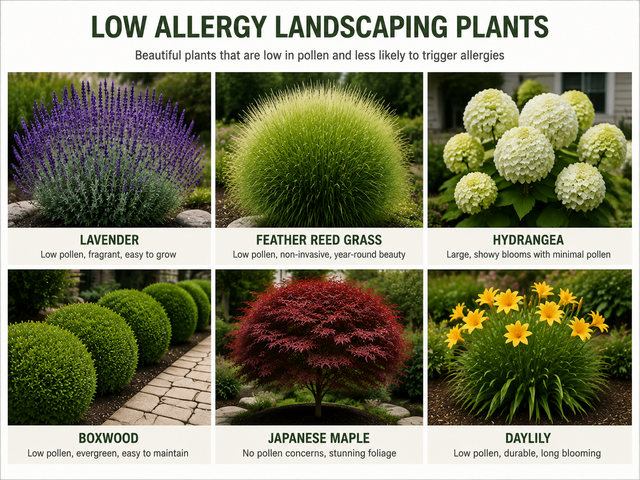
If stepping into your own backyard means sneezing, congestion, itchy eyes, or a scratchy throat by spring, the planting plan is worth a closer look. Much of the airborne pollen that bothers people comes from wind-pollinated plants and turf, and where those sit relative to your doors, windows, and seating matters as much as the species itself. Choosing low allergy landscaping plants — and placing them thoughtfully — can reduce the obvious pollen sources and make a Glendale or Los Angeles yard far easier to enjoy. What it cannot do is promise an allergy-free result: plant sex, bloom timing, wind, mowing, dust, mold, pets, irrigation, and a neighbor's trees all play a role, and pollen travels across property lines. This guide covers how to lower avoidable exposure through plant choice, placement, lawn strategy, ground cover, and dust control — while being clear that a diagnosed allergy still belongs with a healthcare provider.
Which Low Allergy Landscaping Plants Are Worth Considering?
The best low-allergy landscape is usually a diverse, well-maintained design that avoids relying on wind-pollinated turf, highly allergenic plants, heavy pollen-producing trees, and neglected bare soil. Consider lower-pollen ornamental plants, appropriate female cultivars where suitable, contained planting beds, hardscape transitions, and irrigation that keeps dust down without overwatering. A design professional can help identify likely triggers, but people respond differently, so medical allergies should be discussed with a qualified healthcare provider.
What Actually Makes a Yard Allergy-Friendly?
An allergy friendly yard is not defined by a single plant list. It is a landscape arranged to reduce avoidable exposure and make maintenance more predictable. That may mean placing flowering plants away from doors and seating, keeping low-pollen ground covers near paths, reducing dusty bare soil, selecting a lawn that fits the household's mowing routine, and using drip irrigation where it makes sense.
How Do Low Pollen Plants Fit a SoCal Yard?
Low pollen plants are often selected for their pollination method, flower structure, bloom behavior, and placement. In general, plants pollinated by insects tend to release less airborne pollen than plants that depend on wind, but that is not a guarantee for every person or cultivar. Fragrance, sap, leaf texture, dust, and contact with plant material may also affect individual comfort.
BuildCal's guide to the low-maintenance plant palette for a Glendale garden provides useful context for comparing local adaptation, maintenance, and planting goals. Native does not automatically mean low-allergy, and non-native does not automatically mean problematic; the actual plant and its location should be evaluated.
What Are OPALS Plants and Should You Use Them?
OPALS plants refers to a rating system used in some gardening resources to compare the relative allergy potential of ornamental plants. It can be a helpful screening tool when building a plant palette, but it should not be treated as a medical diagnosis or a guarantee that a particular plant will cause no reaction. Ratings may not capture every exposure route, cultivar difference, bloom period, or individual sensitivity.
What Is the Best Grass for Allergies?
The phrase best grass for allergies can be misleading because lawn allergy exposure depends on grass species, mowing, flowering, dust, weeds, pets, and how often the surface is maintained. A regularly mowed lawn is less likely to develop visible seed heads than neglected turf, but mowing itself can disturb pollen, dust, and mold particles. The most suitable lawn is the one that fits the site and the household's maintenance capacity. If the lawn is mostly decorative, our front-yard landscaping guide shows how reducing or replacing turf with planting and paths can lower mowing and pollen exposure at once.
Can You Create an Allergy-Free Garden in SoCal?
An allergy free garden SoCal search usually reflects a desire for a more comfortable outdoor space, but a truly allergy-free garden is not a realistic promise. Pollen can arrive from outside the property, and people may react to dust, mold, insects, fragrances, or plant contact rather than only to pollen. A more accurate goal is a lower-exposure, easier-to-maintain garden planned around the household's known sensitivities.
Which Trees and Shrubs Should You Place Carefully?
Large trees and shrubs influence pollen, shade, airflow, litter, irrigation, and maintenance for many years. Avoid placing a wind-pollinated tree directly beside a patio, bedroom window, entry, or children's play area when a different location is available. Also account for mature canopy and roots near foundations, pipes, walls, walks, and outdoor structures.
BuildCal's list of drought-tolerant plants for Glendale can help with water-wise plant research. Drought tolerance and low allergen potential are separate considerations, so combine them rather than assuming one characteristic guarantees the other.
How Do Ground Covers Mulch and Hardscape Affect Allergies?
Ground covers can reduce exposed soil and make a bed look finished, but the best selection depends on growth habit, pollen, watering, leaf litter, pet use, and maintenance. Mulch can help reduce dust and protect soil, while hardscape paths and patios reduce the need to walk through planting beds. Keep mulch and soil below siding, weep holes, thresholds, and plant trunks, and maintain drainage around the house.
Hardscape is not automatically an allergy solution. Dust from demolition, decomposed granite, unsealed joints, and neglected surfaces can become a maintenance concern, so it helps to weigh decomposed granite, gravel, and pavers for dust, weeds, and upkeep. A properly designed patio or path should have stable edges, appropriate drainage, and a cleaning plan. BuildCal's landscaping services in Los Angeles and nearby communities can coordinate planting, lawns, irrigation, soil, grading, drainage, and maintenance around the finished outdoor space.
What to Check Before You Start a Low-Allergy Landscape Project
- Identify likely triggers: Consider pollen, fragrance, dust, mold, mowing, weeds, pets, and contact with plant material.
- Map high-use areas: Mark doors, bedroom windows, patios, outdoor kitchens, play spaces, pool areas, and paths.
- Review the plant palette: Compare pollination method, bloom period, mature size, maintenance, water needs, and any available allergy-rating information.
- Choose the lawn strategy: Decide whether you need full turf, a smaller lawn, artificial turf, planting, or hardscape for the intended use.
- Control dust and water: Address bare soil, irrigation overspray, damp areas, and runoff and drainage problems that keep soil wet or dusty.
- Plan maintenance access: Leave room for mowing, pruning, debris removal, irrigation service, and surface cleaning.
- Protect the building: Keep mature roots, branches, soil, mulch, and irrigation away from foundations, walls, roofs, and openings.
- Confirm expectations: Do not promise an allergy-free result; define the practical exposure-reduction goals and how they will be maintained.
Which Landscape Choices Fit Different Allergy-Reduction Priorities?
| Project type | Typical scope of work | Permit or HOA approval usually required? | Key considerations |
|---|---|---|---|
| Reduced turf area | Remove or resize lawn, prepare soil, install planting, ground cover, mulch, or paths | Often depends on grading, drainage, HOA rules, and property conditions | Lower mowing demand, but replacement plants still need thoughtful selection and care |
| Artificial turf zone | Excavate or prepare the base, install turf, edge, drainage, and cleaning access | May vary with drainage, HOA, property, and project scope | Grass pollen may be reduced on the surface; heat, debris, and drainage still matter |
| Low-pollen planting bed | Choose and place shrubs, perennials, ground covers, soil, mulch, and irrigation | Usually depends on walls, grading, trees, and HOA requirements | Use ratings as a guide, not a guarantee; location and maintenance affect exposure |
| Patio and path integration | Install pavers or another stable surface with edges, drainage, planting transitions, and access | Depends on grading, drainage, structures, demolition, and HOA rules | Creates cleaner circulation but requires dust control, cleaning, and sound base preparation |
What Mistakes Make an Allergy-Aware Yard Harder to Enjoy?
The first mistake is treating a plant list as a guarantee. A lower-rated plant can still be a poor choice beside a bedroom window, while pollen from a neighboring tree may enter the property regardless of your own selections. The second is ignoring maintenance. Overgrown beds, seed heads, weeds, dry soil, and dirty surfaces can undermine an otherwise careful design.
How Do You Choose a Landscaping Contractor in Glendale?
Choose a licensed landscape contractor who will discuss allergies without making medical promises. Ask whether the proposal addresses plant placement, mature size, turf or artificial turf, irrigation, dust, drainage, access, maintenance, and the relationship between planting and hardscape. Request comparable before-and-after documentation, itemized pricing, a realistic timeline, and clarity about which plant questions should be reviewed with a healthcare professional.
How BuildCal Landscape Helps With Low-Allergy Design
BuildCal can plan a more comfortable yard around lower-pollen plant choices, reduced turf, artificial turf, ground covers, patios, walkways, irrigation, drainage, soil preparation, and maintenance. Its landscaping services in Los Angeles and nearby communities can connect plant selection with the property's sun exposure, soil, water-use goals, circulation, and outdoor-living needs.
Steps to Start Your Low-Allergy Landscape Project With BuildCal
- Schedule a low-allergy design consultation. Share known triggers, symptom patterns, current lawn or plant concerns, and how the yard is used.
- Assess the site. Review sun, soil, drainage, wind, irrigation, windows, doors, patios, paths, turf, structures, access, and neighboring conditions.
- Develop a plant and surface concept. Compare low-pollen plants, lawn reduction, artificial turf, ground cover, mulch, hardscape, and maintenance requirements.
- Confirm scope and pricing. Review the plant palette, materials, irrigation, grading, drainage, timeline, exclusions, and any HOA or city requirements.
- Install and maintain. Complete the landscape work, establish irrigation, review pruning and cleaning, and arrange optional ongoing maintenance.
Frequently Asked Questions About Low Allergy Landscaping Plants
What Are Low Allergy Landscaping Plants?
Low allergy landscaping plants are selections considered less likely to add airborne pollen or other avoidable irritants in a particular yard, based on pollination method, flower behavior, placement, and maintenance. They are not guaranteed to cause no reaction. A practical plan also reduces bare dust, manages irrigation, keeps plants away from high-use areas, and accounts for pollen entering from neighboring properties or street trees.
How Can I Create an Allergy Friendly Yard?
An allergy friendly yard can use lower-pollen plant choices, contained beds, stable paths, manageable turf, appropriate ground covers, mulch, and irrigation that limits dust and runoff. Place noticeable flowering or fragrant plants away from doors, windows, and seating, and maintain the landscape so weeds, seed heads, debris, and overgrown branches do not accumulate. Individual sensitivities vary, so avoid treating any plant list as a medical guarantee.
What Is the Best Grass for Allergies?
The best grass for allergies depends on the lawn's species, mowing schedule, weed pressure, dust, irrigation, sun, soil, and intended use. Regular maintenance can reduce seed-head development, but mowing can also disturb pollen and dust. If the lawn is mostly decorative, reducing its size or replacing part of it with planting, paths, or artificial turf may lower mowing and irrigation demands without promising an allergy-free result.
Can I Build an Allergy Free Garden in Southern California?
An allergy free garden SoCal homeowners can enjoy is better approached as a lower-exposure, easier-to-maintain garden because pollen and other irritants can come from outside the property. Reduce bare soil, position plants thoughtfully, use suitable ground covers and hardscape, and manage irrigation, pruning, weeds, and debris. If someone has a diagnosed allergy, use the landscape plan alongside — not instead of — professional medical advice.
Are OPALS Plant Ratings Reliable for Landscape Decisions?
OPALS plants ratings can be a useful screening tool for comparing the relative allergy potential of some ornamental plants, but they are not a diagnosis or a promise of individual response. Use the rating with plant placement, bloom timing, mature size, fragrance, water needs, fire-wise goals, pet use, and maintenance. A lower-rated plant beside an open window may still be a poor site choice.
Does BuildCal Design and Maintain Low-Allergy Landscapes?
BuildCal can help plan and install a landscape that considers lower-pollen planting, lawn reduction, artificial turf, irrigation, ground cover, hardscape, drainage, and maintenance. Its service area includes Glendale, Los Angeles, and surrounding Southern California communities. The final scope and pricing are confirmed after a consultation or site visit, and optional ongoing maintenance can be discussed after installation.
Start Your Low-Allergy Landscape Plan Today
If you are researching low allergy landscaping plants for a more comfortable yard in Glendale or the surrounding Los Angeles area, contact BuildCal Landscape for a low-allergy design consultation or call +1 (818) 303-1570. BuildCal can help you compare plant placement, lawn and turf choices, irrigation, ground cover, hardscape, and realistic maintenance goals.
Thinking about a new outdoor space?
We’d love to hear your ideas. Let’s explore what’s possible—no pressure, just a friendly conversation.
Give us a call:
+1 (818) 303-1570
Frequently Asked Question
WHAT IF I ALREADY HAVE A DESIGN OR PLAN?
Not a problem at all. We will gladly review your design at the initial consultation and discuss the best way to proceed and achieve the very best finished product