
OUR MISSION IS TO TAILOR FOR EACH CLIENT A BEAUTIFUL, FUNCTIONAL AND ENDURING OUTDOOR ENVIRONMENT THAT WILL PROVIDE A PLACE OF SERENITY FOR FRIENDS AND FAMILY TO APPRECIATE FOR YEARS TO COME.

BuildCal Landscape Landscape Design & Lawn Care Article
Sod vs. Seed vs. Turf for a New SoCal Lawn - Cost, Speed, and What Survives Summer
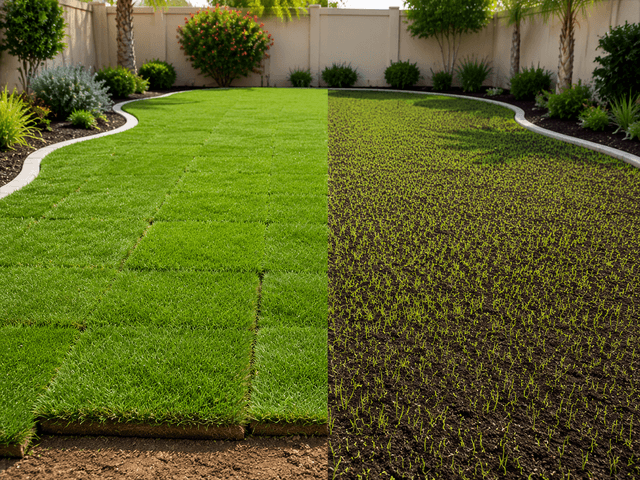
Sod rolls out as an instant green lawn, seed costs a fraction as much, and hydroseed covers a big slope fast — so the choice can feel obvious until you factor in a SoCal summer. Starting a lawn from bare soil in Glendale or Los Angeles is less about the grass on top and more about what happens underneath: site preparation, sun, soil, drainage, irrigation, and how much establishment care the household can actually provide. A sound sod vs seed new lawn SoCal decision weighs cost against speed, water use, foot traffic, pets, and summer survival, not just the price of the material. This guide compares sod, seed, and hydroseed honestly, then looks at artificial turf and turf-free designs for homeowners who want to cut water and mowing. The goal is a lawn that still looks good in August — not just on installation day.
Which New Lawn Option Works Best in SoCal?
Sod is usually the fastest way to create a usable lawn, but it requires careful soil preparation, watering, and early care. Seed or hydroseed may cost less at the material stage and can be useful for larger or irregular areas, but establishment takes longer and weeds, erosion, birds, heat, and inconsistent irrigation can affect results. Artificial turf and turf-free planting reduce or eliminate live grass, but they involve different heat, drainage, maintenance, and design considerations.
What Should You Decide Before a New Lawn Install?
Before comparing materials, define the lawn's use, sun, shade, soil, drainage, irrigation, access, and maintenance level. These details shape the grass, installation method, budget, and aftercare.
What Is the Difference Between Sod Seed and Hydroseed?
Sod Gives the Fastest Visual Result
Sod provides immediate coverage and can reduce the time that bare soil is exposed to foot traffic and erosion. It also creates a more predictable visual pattern when the base is prepared consistently. The installer must fit seams, protect edges, manage transitions, and water the root zone without leaving the surface saturated. Newly laid sod is not maintenance-free; it needs establishment care before it can handle normal use.
Hydroseed Suits Broad or Difficult Areas
Hydroseeding may suit broad or sloped areas, but it is not a shortcut around grading, soil improvement, or irrigation. The seed still needs suitable moisture, protection from runoff, and aftercare. Ask what mix is used and how traffic will be controlled.
What Does Laying Sod Cost in Southern California?
Laying sod cost varies with lawn size, grass type, demolition or removal, soil condition, excavation, grading, irrigation, delivery, access, edges, and aftercare. A simple installation over prepared soil is different from a project that removes an old lawn, repairs drainage, amends compacted soil, modifies sprinkler zones, adds edging, and restores adjacent planting.
How Does Hydro Seed vs Sod Compare?
In a hydro seed vs sod comparison, sod generally offers faster coverage and a more immediate finished appearance, while hydroseed can be useful for larger, irregular, or sloped areas where a sprayed application is practical. Hydroseed usually needs a longer establishment period and careful protection from runoff and traffic. Sod can also fail if it is installed over a poorly prepared base or watered inconsistently.
What Is the Best Grass for Southern California?
The phrase best grass for southern California does not identify one lawn for every Glendale or Los Angeles property. The appropriate choice depends on sun, shade, winter appearance, summer heat, irrigation, mowing height, soil, traffic, pets, and the homeowner's water-use goals. A warm-season lawn may behave differently from a cool-season option, and a blend selected for one exposure may struggle in another.
New turf should be designed with future watering, mowing, disease observation, pest management, and repair in mind. Because uneven watering is a leading cause of thin or patchy turf, our guide to irrigation problems that stress a lawn is useful maintenance context before you commit to a species or blend.
What Drought Lawn Options Can Replace or Reduce Grass?
Drought lawn options include reducing the lawn footprint, using artificial turf, installing lower-water ground cover, creating planted areas, or combining a smaller lawn with decomposed granite, pavers, or other hardscape. The best solution depends on how the area will be used. A decorative strip may not need living turf, while a play area may justify a smaller, better-maintained lawn.
For turf-free areas, our list of drought-tolerant planting alternatives can help determine whether a full lawn is necessary for the way the property is used, or whether planting and ground cover can carry part of the space at a fraction of the water demand.
Does a New Lawn Need a Permit or Approval?
A basic lawn replacement may not require the same approvals as a project that changes grade, adds drainage, builds retaining or privacy walls, installs electrical work, changes a driveway, or includes a structure. HOA rules can also address visible landscaping, artificial turf, front-yard materials, irrigation, or construction timing. Requirements vary by city, property, scope, and association.
What to Check Before You Start a New Lawn Install
- Define the use: Decide whether the lawn is for play, pets, entertaining, appearance, cooling, circulation, or a small decorative area.
- Map sun and shade: Observe exposure near walls, trees, fences, structures, and windows before selecting a grass type.
- Test the site conditions: Check soil, compaction, grade, drainage, irrigation coverage, roots, utilities, and access.
- Compare the full installation: Include removal, disposal, soil preparation, grading, irrigation, delivery, edging, installation, and aftercare.
- Plan water: Make sure sprinkler or drip zones match the lawn and adjacent planting rather than watering everything together.
- Set an establishment schedule: Confirm when the lawn can be walked on, mowed, fertilized, or exposed to pets and play.
- Consider alternatives: Compare a smaller lawn, artificial turf, ground cover, planted beds, pavers, and decomposed granite versus gravel and pavers as turf-free surfaces.
- Review approvals: Check city, utility, drainage, property-line, and HOA requirements before construction.
Which New-Lawn Option Fits Different Priorities?
| Project type | Typical scope of work | Permit or HOA approval usually required? | Key considerations |
|---|---|---|---|
| Sod installation | Remove or prepare the site, correct grade, improve soil, adjust irrigation, deliver and install turf, then establish it | Depends on grading, drainage, artificial-turf rules, property, and HOA requirements | Fast visual coverage; seams, watering, access, and base preparation matter |
| Broadcast seed | Prepare soil, distribute seed, protect the surface, irrigate consistently, and manage germination and early growth | Usually depends on associated grading, drainage, irrigation, and HOA rules | Flexible for shapes and blends; slower coverage and more exposure to weeds, birds, and heat |
| Hydroseed | Prepare and grade the site, apply seed and mulch mixture, protect against runoff, and monitor establishment | May vary with slope, erosion control, drainage, property, and HOA rules | Useful for broad or irregular areas; still needs compatible seed, water, and protection |
| Artificial turf | Remove existing material, excavate, install and compact a base, add drainage and edges, lay turf, and finish seams | Varies by city, drainage, front-yard rules, property, and HOA requirements | No live grass watering; heat, cleaning, drainage, and debris management remain important |
| Turf-free landscape | Replace lawn with planting, ground cover, mulch, pavers, DG, seating, irrigation, or a combination | Depends on grade, drainage, structures, hardscape, and HOA rules | Can reduce mowing and water but requires a clear use plan and maintenance strategy |
What Mistakes Cause a New Lawn to Fail?
The most expensive mistake is installing grass over compacted, poorly graded, or poorly drained soil. A new lawn can look acceptable at first and then develop thin areas, puddles, dry patches, weeds, or disease when the root zone is inconsistent. Irrigation that misses corners or sprays paving can create another set of problems.
How Do You Choose a Lawn Contractor in Glendale?
Choose a licensed landscape contractor who can compare living turf, artificial turf, and turf-free options. Ask whether the proposal addresses sun, soil, drainage, irrigation, access, establishment, maintenance, pricing, timing, comparable work, and permit or HOA responsibilities.
BuildCal Landscape has served Glendale, Los Angeles, and nearby Southern California communities since 2012. The founder has a landscape architecture degree from Cal Poly Pomona and project-management experience. Scope and pricing are confirmed after a site visit, with optional maintenance.
How BuildCal Landscape Helps With New Lawns
BuildCal can plan a new lawn install around soil, grading, drainage, irrigation, grass selection, artificial turf, planting, and hardscape transitions. Its landscaping services in Los Angeles and nearby communities connect the lawn with planting beds, paths, patios, water-wise areas, and maintenance, and our front-yard landscaping guide shows how reducing lawn can lower water and mowing without losing curb appeal.
Steps to Start Your Project With BuildCal Landscape
- Schedule a consultation or site visit. Discuss the lawn's intended use, current surface, water goals, timing, pets, and maintenance preferences.
- Assess the site. Review soil, drainage, grade, sun exposure, irrigation, existing structures, utilities, access, and adjacent landscape areas.
- Compare options and receive a quote. Evaluate sod, seed, hydroseed, artificial turf, turf-free planting, hardscape, timeline, and pricing.
- Confirm approvals where required. Address HOA, drainage, utility, grading, or other city requirements before work begins.
- Install and establish the lawn. Complete preparation and installation, review aftercare, and arrange an optional maintenance plan.
Frequently Asked Questions About Sod vs Seed New Lawn SoCal
Is Sod or Seed Better for a New Lawn?
In a sod vs seed new lawn SoCal decision, sod is usually better when you want fast coverage and can support careful early watering. Seed may be better for large, irregular, or specialized areas where a blend and flexible application matter. Neither option works well over poor soil, inadequate drainage, or inconsistent irrigation. The best choice depends on use, sun, grass type, timing, access, budget, and aftercare capacity.
How Much Does Laying Sod Actually Cost?
Laying sod cost varies with lawn size, turf type, delivery, access, removal, disposal, soil preparation, grading, irrigation, edging, drainage, and aftercare. A surface-only price may not include the work needed to correct compacted soil or uneven watering. Ask for an itemized proposal and confirm pricing after a site visit because the condition of the existing lawn area can change the complete project scope.
What Is the Difference Between Hydroseed and Sod?
Hydro seed vs sod compares a sprayed seed-and-mulch application with mature turf installed as rolls or slabs. Sod provides faster visual coverage, while hydroseed can suit broad, irregular, or sloped areas when the site is prepared and protected from runoff. Hydroseed takes longer to establish and still needs consistent moisture, suitable temperatures, and aftercare. Sod also needs watering and base preparation to root successfully.
What Is the Best Grass for Southern California Homes?
The best grass for southern California depends on the property's sun, shade, soil, heat, irrigation, traffic, pets, mowing preferences, and water-use goals. A grass that performs in full sun may struggle beneath trees or beside a hot wall. Ask for the proposed species or blend, expected watering, mowing height, seasonal behavior, repair approach, and maintenance requirements rather than choosing only by appearance.
What Are Drought Lawn Options Besides Artificial Turf?
Drought lawn options can include reducing the lawn area, using lower-water ground cover, installing planted beds, adding decomposed granite or pavers, or creating a smaller lawn with efficient irrigation. Artificial turf is another option, but it still requires base preparation, drainage, cleaning, and debris management. Select the alternative based on how the area will be used, the site's heat and drainage, appearance, and ongoing maintenance.
How Long Does a New Lawn Install Take to Establish?
A new lawn install timeline depends on whether you choose sod, seed, hydroseed, artificial turf, or a turf-free design, plus the condition of the site, irrigation, weather, access, and project size. Sod can look finished sooner but still needs establishment care. Seed and hydroseed require a longer period before regular traffic. Your contractor should provide a specific watering, mowing, and use schedule after installation.
Start Your New Lawn Project Today
If you are comparing sod vs seed new lawn SoCal options in Glendale or the surrounding Los Angeles area, contact BuildCal Landscape for a lawn-planning consultation or call +1 (818) 303-1570. BuildCal can help you review soil, drainage, irrigation, lawn type, artificial turf, drought lawn options, scope, timeline, and maintenance before work begins.
Thinking about a new outdoor space?
We’d love to hear your ideas. Let’s explore what’s possible—no pressure, just a friendly conversation.
Give us a call:
+1 (818) 303-1570
Frequently Asked Question
IF I ALREADY KNOW EXACTLY WHAT I WANT, WHY DO I EVEN NEED DESIGN SERVICES OR CONSULTATION?
This is a very good question. Creating a pleasing and lasting landscape project is more than simply digging holes, laying sod, and stacking stones. Every site has its own unique set of issues which need to be addressed. Items such as sun exposures, site drainage, grading, and a number of other conditions can have a dramatic impact on whether or not the finished project will stand the test of time and function as it was intended. During the course of preparing your landscape design and planning of each project, we record and analyze all the issues which will affect the final results, including follow up maintenance. With this information, we can proceed with a game plan which, in the end, will add to your complete satisfaction, as well as saving you money by addressing these issues before the project begins.