
OUR MISSION IS TO TAILOR FOR EACH CLIENT A BEAUTIFUL, FUNCTIONAL AND ENDURING OUTDOOR ENVIRONMENT THAT WILL PROVIDE A PLACE OF SERENITY FOR FRIENDS AND FAMILY TO APPRECIATE FOR YEARS TO COME.

BuildCal Landscape Hardscape & Patios Article
Driveway Replacement in SoCal - Pavers vs. Concrete vs. Stamped - Cost, Lifespan & Permits
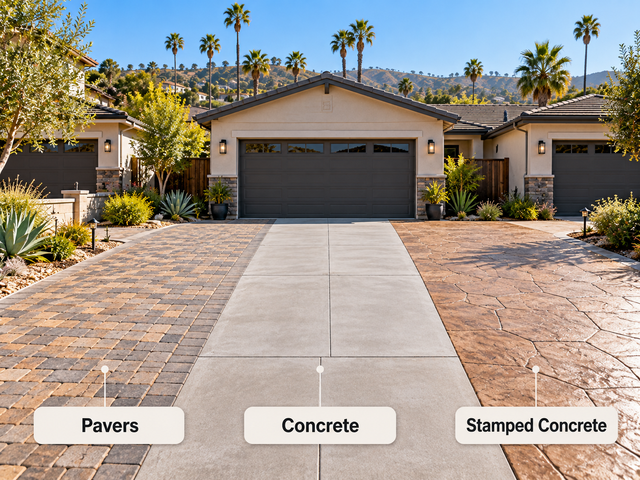
When you're weighing driveway pavers vs concrete cost, the honest answer is that no single option "wins" — pavers, poured concrete, and stamped concrete each trade off price, lifespan, repairability, drainage, and looks differently. What drives the real number for any of them is the same: the square footage, how much demolition and base prep the site needs, the material, grading, and access. Below is a straight comparison to help you choose and budget, plus the permit question many SoCal homeowners miss. This information is current as of October 2026; a firm price comes from an on-site assessment.
Pavers, concrete, or stamped?
Poured concrete is typically the lowest upfront cost and a clean look, but it cracks over time and is hard to repair invisibly. Stamped concrete adds a decorative pattern at a higher cost, but shares concrete's cracking and repair drawbacks and needs periodic resealing. Pavers cost more upfront but are the most repairable (lift and replace individual units), handle ground movement well, and offer permeable options for drainage. The best choice depends on your budget, how long you plan to stay, your soil, and drainage needs — not on price alone.
What does a driveway replacement involve?
Replacing a driveway is more than swapping the surface. It means removing and hauling the old driveway, preparing and compacting a proper base, grading for drainage, and installing the new surface — with edge detailing and, for pavers, edge restraint and jointing. As with any hardscape, the base and grading beneath matter as much as the material on top. This work falls under BuildCal's paver and driveway installation, and the right approach depends on your soil, slope, and how much load the driveway carries.
Why base prep and grading decide longevity
A driveway carries vehicle weight, so the base has to be built for it. A properly excavated, compacted base and correct grading are what keep any driveway — concrete or paver — from cracking, settling, and pooling water. Skimp on the base to lower the bid, and the surface fails early regardless of which material you chose. When comparing quotes, look at the base specification, not just the headline price and finish.
Pavers vs. concrete vs. stamped: the comparison
| Factor | Poured concrete | Stamped concrete | Pavers |
|---|---|---|---|
| Upfront cost driver | Typically lowest | Mid — pattern/finish adds labor | Highest — units + labor-intensive install |
| Lifespan | Long, but cracks appear | Long, same cracking tendency | Long; individual units replaceable |
| Repairability | Hard to patch invisibly | Hard to match pattern on repair | Lift and replace single pavers |
| Drainage / permeability | Impervious (runoff) | Impervious (runoff) | Permeable options available |
| Ground movement | Prone to cracking | Prone to cracking | Flexes with minor movement |
| Maintenance | Low; crack repair over time | Periodic resealing | Joint sand top-up; occasional reset |
| Look | Plain, modern | Decorative, mimics stone/brick | Wide range of patterns/colors |
For a deeper local breakdown, our Glendale driveway cost comparison and our pavers vs. concrete design insights go further into the trade-offs for Southern California homes.
What drives driveway replacement cost?
- Size. Square footage sets the baseline for material and labor.
- Demolition. Removing and hauling the old driveway adds scope before the new one starts.
- Base prep and grading. Vehicle loads and clay soils often need more base and careful grading.
- Material and finish. Plain concrete, stamped patterns, and paver type/pattern each carry different costs.
- Drainage. Managing runoff or adding permeability affects scope.
- Access and slope. Steep or tight sites raise labor.
- Permits. Right-of-way or expansion work may add steps (see below).
Do you need a permit for a driveway in SoCal?
Often, for part of it. Resurfacing within the existing footprint is treated differently than expanding a driveway or doing work in the public right-of-way — the "approach" or "apron" where your driveway meets the street usually sits on city land and commonly requires a permit to alter. Expanding the driveway's size can also trigger zoning or coverage rules. Because requirements vary by city and change over time, this is general guidance, not a guarantee — confirm with your city before work begins. We identify any permit needs during the assessment and build them into the scope.
Permeable pavers and water rules
One real advantage of pavers worth calling out: permeable paver systems let rainwater soak through into the ground instead of running off to the street. That helps with stormwater and can support water-wise goals — increasingly relevant across Southern California. Our guide to permeable driveway pavers explains how they work, and if you're weighing looser surfaces too, our decomposed granite vs. pavers comparison rounds out the options.
What to check before starting your driveway project
- How long do you plan to stay — does upfront cost or long-term repairability matter more?
- What's your soil and slope — prone to movement, or stable and flat?
- Do you want permeability for drainage or water-wise reasons?
- Are you resurfacing within the footprint, or expanding / touching the street approach?
- Has the quote specified base depth and grading, not just the finish?
- Have you confirmed any permit needs with the city?
What mistakes lead to a cracked or costly driveway?
- Choosing on upfront price alone, ignoring repairability and lifespan.
- Skimping on base prep and grading under a vehicle-load surface.
- Overlooking drainage, so water pools or runs toward the house or garage.
- Expanding or altering the street approach without checking permit rules.
- Hiring an unlicensed installer for a major hardscape project.
- No written scope, so demolition, base, and grading costs drift.
How do you choose the right landscaping company in Glendale?
For a driveway, pick a licensed landscape contractor (CSLB) who builds the base for vehicle loads, grades for drainage, and gives you a written estimate that spells out demolition, base, material, and any permit steps. Experience with Glendale-area soils, slopes, and the street-approach permit process matters. A contractor who walks you through the honest trade-offs between pavers, concrete, and stamped — rather than pushing one — is giving you the information to choose well.
How does BuildCal help you?
BuildCal is a licensed landscape contractor (California State License Board / CSLB) in Glendale, and we handle driveway replacement end to end: removing the old surface, building a base sized for vehicle loads, grading for drainage, and installing pavers, poured concrete, or stamped concrete to suit your budget and soil. We'll walk you through the real trade-offs so the choice fits how long you'll stay and how your site drains, flag any permit needs including street-approach work, and offer permeable paver options where runoff or water-wise goals matter. You get a written estimate and scope before work begins, with pricing confirmed after an on-site assessment.
Steps to request your project from BuildCal
- Share a few photos of the existing driveway and a short description of what you want.
- Schedule an on-site assessment of the size, soil, grade, drainage, and access.
- Receive a written estimate with scope, material options, and timeline, including any permit steps.
- Approve the plan and schedule the work.
- Demolition, installation, and a final walkthrough, with cleanup and aftercare notes.
Frequently asked questions about driveway replacement in SoCal
Are pavers or concrete cheaper for a driveway?
Poured concrete is typically the lower upfront cost, which is why many homeowners start there. Pavers cost more to install because of the units and the labor-intensive base and setting work. But the comparison isn't only upfront — pavers are far easier to repair, flex with ground movement, and offer permeable options, which can make them more economical over the driveway's life. The right call depends on your budget horizon and site. Costs vary by project; this is current as of October 2026.
Is stamped concrete worth it over plain concrete?
Stamped concrete gives you a decorative, stone- or brick-like look that plain concrete can't, at a higher cost for the pattern and finish work. The trade-off is that it shares plain concrete's tendency to crack and is hard to repair without the patch showing, plus it needs periodic resealing to keep its color. If looks matter and you accept the maintenance, it's a popular middle ground; if repairability is the priority, pavers are usually the better long-term choice.
How long does each driveway type last?
All three can last a long time with a proper base and drainage. The difference is how they age: concrete and stamped concrete develop cracks over the years that are hard to fix invisibly, while pavers can last indefinitely because damaged units are lifted and replaced individually. Lifespan depends heavily on base preparation, grading, soil movement, and load — which is why the work beneath the surface matters as much as the material.
Do I need a permit to replace my driveway?
Possibly for part of it. Resurfacing within the existing footprint differs from expanding the driveway or altering the street approach (apron), which usually sits in the public right-of-way and commonly needs a permit. Expansion can also raise zoning or lot-coverage questions. Rules vary by city and change, so this is general guidance — confirm with your local authority. We identify any permit needs during the assessment and include them in the scope and timeline.
Are permeable driveway pavers better for drainage?
They can be a real advantage. Permeable paver systems let rainwater soak into the ground rather than sheeting off to the street, which helps with stormwater and supports water-wise goals that matter across Southern California. They require the right base and periodic maintenance to keep draining well. If managing runoff or meeting water-conscious objectives is a priority, permeable pavers are worth discussing during your on-site assessment.
Can you replace a driveway on a sloped or hillside lot?
Yes, though slope adds considerations. A sloped driveway needs careful grading for drainage and traction, and sometimes drainage features or a retaining element at the edges. Material choice matters too — pavers flex with minor ground movement common on hillside lots, while concrete is more prone to cracking. We assess the slope, soil, and drainage on-site and build the approach into the written scope so the finished driveway is safe and durable.
Request your estimate today
If you're comparing driveway pavers vs. concrete cost for a replacement in Glendale or the greater Los Angeles area, the clearest next step is a real plan for your actual driveway. Send BuildCal a few photos of your space to schedule an on-site assessment and get a written estimate — covering demolition, base, material options, and any permit steps — before work begins. Call (818) 303-1570 or request your free estimate online.
Thinking about a new outdoor space?
We’d love to hear your ideas. Let’s explore what’s possible—no pressure, just a friendly conversation.
Give us a call:
+1 (818) 303-1570
Frequently Asked Question
CAN YOU MAINTAIN MY LANDSCAPE AFTER THE FINAL INSTALLATION?
Yes – We have a complete team of highly trained maintenance professionals to provide weekly, daily or even monthly services for your property. While a growing number of people have become dissatisfied with the poor quality of the typical ‘mow, blow, and go’ service, we take the time to maintain your property to perfection while providing a reliable service you can trust.