
OUR MISSION IS TO TAILOR FOR EACH CLIENT A BEAUTIFUL, FUNCTIONAL AND ENDURING OUTDOOR ENVIRONMENT THAT WILL PROVIDE A PLACE OF SERENITY FOR FRIENDS AND FAMILY TO APPRECIATE FOR YEARS TO COME.

BuildCal Landscape Backyard Remodel & Landscape Design Article
Old Pool You Barely Use? Keep It, Convert It, or Remove It in SoCal
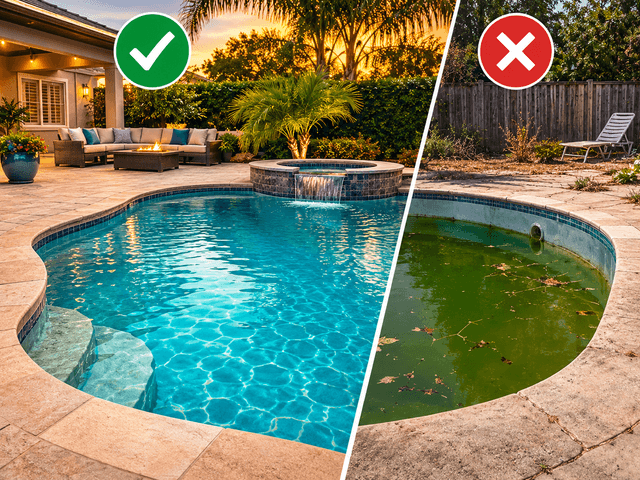
An underused pool can take over a backyard long after it stops fitting your life. It sets the fencing, the furniture, the circulation, and the maintenance calendar, even in years when nobody swims. But demolition is expensive and irreversible, so the answer is rarely as simple as "just get rid of it." If you are asking whether a pool is worth keeping or removing, the key is to separate four things homeowners tend to blend together: how much you use it, what condition it is actually in, how much yard it controls, and what you would genuinely build in its place. You may keep and refresh the pool, convert its role to a smaller water or patio concept, or remove it and reclaim the footprint. This guide compares those three paths, including drainage, permits, replacement uses, and project scope, so you can make an informed decision before demolition begins.
A Quick Note Before You Decide
A tired pool can create a strange kind of decision fatigue. You may dislike maintaining it but still hesitate to remove something that feels permanent. You may imagine a patio in its place, then worry you will miss the water the first hot weekend after construction is finished. That hesitation is useful. Pool decisions are hard to reverse, so the goal is not to force a quick answer. The goal is to separate four things that homeowners often blend together: how much you use the pool, what condition it is in, how much backyard space it controls, and what you would genuinely build if that space became available. Do that first. Then the keep-versus-convert-versus-remove decision becomes much clearer.
First Decide What Problem You Are Solving
Before looking at unused pool options, finish this sentence: "I would enjoy this yard more if…"
- …the pool area looked better and felt more comfortable.
- …the pool were smaller and the yard had more room for entertaining or planting.
- …I did not have to organize so much of the backyard around water.
- …the patio connected better to the house, dining area, or outdoor kitchen.
- …I had more open space for children, pets, gardening, or everyday use.
- …I could stop maintaining a feature my household rarely uses.
Those are different problems, and they lead to different projects. If the pool is still structurally and mechanically serviceable but the surrounding yard is the real disappointment, removal may be solving the wrong problem. If the water itself is what you no longer want, a beautiful new deck around the same full-size pool will not change the core issue. A good decision starts with the complaint, not the construction method.
Map How the Pool Controls the Yard
Pools do more than occupy their own footprint. They also control circulation, fencing, furniture placement, planting, shade, drainage, and where people can safely move through the backyard. Walk the yard as if the pool were not there and note what changes.
- Where would the main dining table go if you had more continuous patio space?
- Would you create a larger lawn or planting area, or would that simply create another maintenance obligation?
- Could an outdoor kitchen, fire feature, pergola, or lounge zone sit in a better location?
- Does the current pool interrupt the most natural route between the house and the rest of the yard?
- Is the pool actually the visual focal point you want, or is it just the largest object in the yard?
- If you kept it, what would need to change around it for you to use the space more often?
This exercise is the same thinking used in good outdoor living space planning: zones should follow how people actually move, sit, cook, gather, and relax, not simply whatever layout already exists.
Is Your Pool Worth Keeping or Removing?
There are three broad scope tiers, and it helps to name them before comparing construction options. A focused refresh keeps the pool and improves the surrounding deck, planting, drainage, or equipment access. A conversion changes the role of the pool area, such as creating a smaller water concept or a pool-to-patio solution. Full removal or rebuild is the largest scope and must account for backfill, drainage, access, and what replaces the footprint.
Ask one question before comparing those options: if the pool disappeared tomorrow, what would you build in that exact space? If the answer is vague — "maybe more yard" or "probably a patio" — you may not have a strong enough reason to remove it yet. If the answer is specific — "a dining patio connected to the kitchen, a shaded lounge, two planting beds, and open space for the dog" — then you are comparing two real lifestyles rather than reacting to maintenance frustration. That specificity is especially important for a pool-to-patio decision. Removing water only creates an opportunity; the design of the replacement space determines whether the yard actually gets better.
Option One Keep the Pool but Fix the Yard
Keeping the pool does not mean accepting the backyard exactly as it is. For many tired pool yards, the water is not the real problem. The problem is the cracked-looking or dated surround, weak shade, awkward furniture zones, exposed equipment, poor planting, or a layout that makes the pool feel like an obstacle instead of an amenity.
When Keeping the Pool Makes Sense
- You still swim enough that you would genuinely miss it.
- The pool's location works with the house and does not consume space needed for a higher-priority use.
- The shell and major systems are worth evaluating for continued service rather than assuming demolition is necessary.
- Your frustration is mostly with the deck, shade, planting, privacy, lighting, or furniture layout.
- You expect the pool to remain part of how the household entertains, exercises, or spends hot-weather weekends.
Condition should be evaluated by the appropriate pool professional before you build a design around keeping it. Landscape and hardscaping decisions should follow that assessment, not substitute for it.
Refresh the Pool Area Instead of the Pool Decision
A pool can feel dramatically different when the surrounding space is redesigned as an outdoor room rather than a strip of paving around water.
- Create a real lounge zone instead of scattering chairs around the perimeter.
- Add shade where people actually sit, not wherever a structure happens to fit.
- Use planting to soften fencing and equipment views while keeping required access clear.
- Improve the connection between the house, dining area, pool, and secondary seating zones.
- Replace or redesign tired paving where appropriate and coordinate drainage before new surfaces go in.
- Use low, controlled outdoor lighting to make the pool area feel intentional after dark.
If the goal is to make the pool yard useful for dinners and gatherings rather than just swimming, seating, circulation, cooking, shade, and planting all need to work as one plan.
Option Two Convert the Pool's Role Not Its Finish
Pool conversion is the middle path, but the phrase covers several very different ideas. Some homeowners mean keeping water but reducing how dominant the pool feels. Others mean a smaller plunge-style concept. Others are imagining a sunken lounge, deck, or patio where the pool used to be. Those should not be grouped together as one easy "conversion." They involve different structural, plumbing, drainage, permitting, and construction questions.
A Smaller Water Concept or Plunge-Style Conversion
If you like having water but no longer want the entire backyard organized around a full-size pool, a smaller-water concept may be worth exploring. The design question is whether the existing pool can realistically contribute to that concept or whether the work becomes substantial reconstruction. Existing shell geometry, depth, reinforcing, plumbing routes, equipment, access, and local requirements all affect feasibility. Do not assume "make the pool smaller" is automatically simpler than either renovating it or removing it. Sometimes the design makes sense; sometimes it creates a complicated hybrid project. That is why this option should be evaluated as a construction concept, not chosen from an inspiration photo.
Pool to Patio and What It Really Means
The phrase pool to patio sounds simple: remove the water, create a flat surface, put furniture on it. The real project is what happens below that finished surface. A durable patio needs a properly planned base, drainage strategy, finished elevations, and a legal path for what happens to the existing pool shell. Depending on the jurisdiction and the chosen removal or backfill method, the old pool may be removed, partially removed, or handled through a specific approved backfill approach before the new outdoor surface is built. Do not treat an empty pool shell as a ready-made foundation and simply improvise a cover over it. If a retained-shell structural concept is being considered, it needs professional design and approval for the intended use. Once the below-grade strategy is resolved, the visible part becomes a normal patio design problem: size, circulation, shade, furniture, planting edges, and material choice. See our patio design ideas for ways to make the reclaimed footprint feel like part of the yard rather than a rectangle that obviously used to be a pool.
Separate Empty Pool Inspiration From Real Buildability
Online inspiration makes old pool shells look endlessly reusable: sunken lounges, gardens, decks, play areas, and other creative conversions. The useful part of those ideas is the question they raise — what new function do you want? The risky part is assuming the existing shell is automatically suitable for that function.
- A sunken lounge changes access, guard, drainage, and fall-risk questions.
- A garden inside a shell changes drainage, soil depth, waterproofing expectations, and irrigation behavior.
- A deck or platform over a pool introduces structural loading and access issues that need a real design.
- A filled pool used as future patio space depends on an approved demolition, backfill, and subgrade strategy.
Treat empty pool ideas as design prompts, not construction details. First choose the function; then determine the legal and technically sound way to create it.
Option Three Remove the Pool and Reclaim Space
Pool removal makes the most sense when the water feature is no longer part of the life you want in the yard and the reclaimed space has a specific job waiting for it.
When Removal Becomes the Stronger Option
- The pool is rarely used and that pattern has stayed consistent, not just changed for one season.
- The pool blocks the layout you actually want, such as a larger entertaining zone, garden, lawn, or flexible open area.
- You do not want to organize future backyard maintenance and safety planning around a swimming pool.
- You already expect major work around the pool, so keeping it would still leave the main lifestyle problem unsolved.
- You can describe the replacement yard clearly enough to know the space will be used more than the pool is used now.
Removal should be thought of as the first phase of a new yard, not the last phase of an old pool.
Pool Removal in SoCal Is a Site-Planning Project
Southern California does not have one universal pool-removal detail that applies identically in every city. Permit, demolition, backfill, compaction, drainage, landscape, and future-development requirements can vary by jurisdiction and site conditions. In Glendale, the city's current permit guidance specifically states that pool backfill projects require Design Review, and it notes that backfilled areas are expected to be maintained as landscaping unless the project demonstrates compliance with the applicable development standards for another use. The City of Los Angeles separately maintains a formal "Backfill of Swimming Pools" information bulletin and a process for requests involving filling an existing pool in lieu of removing the shell. The practical takeaway is simple: confirm the local pathway before designing the finished yard over the former pool area. If the project also adds new walls, structures, grading, or substantial hardscaping, review how local wall and hardscape permits work early rather than treating permits as something to solve after the layout is complete.
Partial Removal Backfill and Full Removal Differ
Homeowners often hear different pool-removal terms and assume they describe the same end result. They do not. The amount of shell removed, how the remaining structure is treated, what fill is used, how it is placed and compacted, how drainage is handled, and what documentation or inspection is required can affect what the area is suitable for afterward. That matters because your future plan may be landscaping, a patio, or some later project you have not imagined yet. Do not choose the below-grade method only by asking which one is fastest. Start with the intended future use of the footprint, then ask what removal or backfill approach your jurisdiction will approve for that use.
The Drainage Question After Pool Removal
A swimming pool is a low point by design. A finished yard usually should not behave like one. When the pool disappears, the new grade has to reconnect to the rest of the property. That means thinking about where surface water goes, how the replacement patio or planting area meets existing elevations, and whether the new layout accidentally creates a basin against the house, wall, or neighboring property. Drainage should be resolved before pavers, concrete, planting, or furniture zones are finalized. The same principle in why grading and runoff cause standing water applies here: the invisible slope and drainage plan needs to work before the finished surface looks good.
What Should Actually Replace the Pool?
Removing a pool only improves the yard if the replacement space earns its footprint. If the reclaimed area is meant for gatherings, our guide to turning a backyard into an entertainment space shows how the layout can support dining, lounging, and cooking as one plan.
Reclaim It as a Larger Entertaining Patio
This works when the old pool occupies the best flat area in the yard and you routinely need room for dining, lounging, cooking, or gatherings. The design should avoid creating one giant empty slab. Break the space into usable zones, add shade, soften edges with planting, and keep circulation clear.
Create a Garden or Landscape-Focused Yard
If what you really want is greenery, trees, a kitchen garden, or a lower-intensity outdoor space, the former pool footprint can become part of a broader landscape design rather than a single hard surface. Explore our landscape design services if the goal is to turn the reclaimed footprint into planting, lawn, pathways, shade, and outdoor-use zones instead of simply paving the entire area.
Combine a Mixed Patio and Planting Plan
For many yards, this is the strongest answer: enough hardscaping for furniture and everyday use, enough planting to keep the space cool and visually soft, and enough open area that the backyard does not feel overbuilt. The old pool footprint does not have to remain one single material or one single zone. It can become several smaller outdoor rooms tied together by grade, circulation, and planting.
Keep a Flexible Open Zone Instead
Families change. A flexible area can serve play, pets, temporary seating, exercise, or future features without locking the yard into one permanent program immediately. This is often more useful than replacing one single-purpose feature with another single-purpose feature simply because you feel pressure to fill the space.
The Decision Framework That Works for Most Homeowners
If you are still stuck, score the pool against these six questions.
How Often You Actually Use It
How often did your household actually use the pool over the last full year? Use real behavior, not the version of summer you hoped you would have.
What Condition the Pool Is Really In
What does a qualified pool professional say about the shell, plumbing, equipment, and required repairs? Do not make a keep-or-remove decision from appearance alone.
How Much Space Pressure You Feel
Is the yard missing a function you would use weekly because the pool occupies the only logical place for it?
Whether Water Still Fits Your Lifestyle
Does water still belong in the way your household relaxes, entertains, exercises, or spends weekends?
How Specific Your Replacement Plan Is
Can you draw or describe exactly what replaces the pool? The more specific the answer, the easier it is to judge whether removal creates real value for your daily life.
How Much Future Flexibility You Need
Will the chosen removal or conversion method support the way you may want to use the area later? This is where local permit requirements and below-grade construction details matter.
If the pool scores well on use and lifestyle fit, refresh may be the right answer. If you still want water but not a full-size pool-dominated yard, investigate conversion. If use is low, space pressure is high, and the replacement plan is specific, removal becomes much easier to justify.
Do Not Let Resale Fear Make the Decision for You
Homeowners often ask whether removing a pool will help or hurt resale value. There is no responsible universal answer. Buyer preferences differ, neighborhood expectations differ, lot sizes differ, and the quality of both the existing pool and the replacement yard matters. A neglected pool and a beautifully planned pool yard are not the same product. A poorly executed fill-in and a cohesive new outdoor living space are not the same product either. If resale is a major factor, ask a local real-estate professional for property-specific market context. Do not let a generic online claim about "pools always add value" or "buyers hate pools" decide a permanent construction choice.
Common Pool Decision Mistakes to Avoid
- Draining the pool and leaving it as a long-term non-solution. An unused shell still occupies the yard and creates maintenance, drainage, access, and safety questions.
- Choosing removal before deciding what replaces the pool. Demolition without a finished-yard plan often produces an expensive blank space.
- Assuming every pool can become a plunge pool with a simple interior wall. Feasibility depends on the existing structure, systems, design, and local approvals.
- Treating pool to patio as a surface-only project. The base, backfill or removal method, drainage, grades, and future use matter more than the paver color.
- Copying an empty pool idea from social media without checking structure and permitting. Inspiration is not an engineered detail.
- Ignoring how removal changes drainage. The former pool area has to become part of the site's finished grading strategy.
- Assuming removal automatically improves resale. Market response is property-specific and should not be presented as a guarantee.
- Building the new patio first on paper and asking about permits later. Jurisdiction rules can change what the former pool footprint may become.
The Layered Plan That Works for Most Pool Decisions
For an old or underused pool, the most reliable decision process usually looks like this:
- Diagnose the pool. Separate cosmetic frustration from structural or mechanical condition.
- Map the yard. Identify what the pool blocks, what it supports, and how people actually move around it.
- Draw all three options. Keep and refresh, convert, and remove should each have a real layout, not just a sentence.
- Check jurisdiction constraints. Confirm pool backfill or removal, grading, drainage, and new hardscaping requirements before selecting the final path.
- Design the replacement use. Patio, planting, lounge, lawn, or mixed use should be planned before demolition.
- Sequence the work. Below-grade demolition, backfill, and drainage come before finished surfaces, planting, irrigation, and outdoor lighting.
Gathering measurements, photos, priorities, and examples before you compare layouts makes the first design meeting far more productive.
Get a Real Plan Before You Make an Irreversible Pool Decision
An old pool you barely use is not automatically a demolition project. Sometimes the right answer is a better deck, shade, planting, and furniture layout. Sometimes it is a smaller water concept. Sometimes the pool is occupying the exact piece of yard you need for the way you live now. Deciding whether a pool is worth keeping or removing works best from the future yard backward: picture the version you would keep, the version you would convert, and the version with no pool at all, then compare which one creates the outdoor space your household is most likely to use — and confirm the technical and permit path before construction begins. For construction scope and site coordination, review our hardscaping services before demolition.
Get a Pool-Yard Plan Before You Commit
Compare a focused pool-area refresh, a conversion concept, and a full removal or rebuild path, organized by project intensity rather than published prices, before your design consultation. For a property-specific plan, visit our hardscaping services or book a consultation and call +1 (818) 303-1570.
Frequently Asked Pool Keep or Remove Questions
Is My Old Pool Worth Keeping or Removing?
Start with use, condition, space pressure, and the replacement plan. If you still use the pool and the main frustration is the surrounding yard, keeping and refreshing it may make more sense than removal. If the pool is rarely used, blocks a higher-priority backyard function, and you can clearly describe what will replace it, removal becomes a stronger option. Have the pool's condition evaluated separately so the decision is not based on appearance alone.
What Are the Best Unused Pool Options?
The main options are to keep and refresh the pool area, convert the pool's role through a smaller-water or professionally designed reuse concept, or remove and backfill it and redesign the footprint as patio, planting, lawn, or mixed outdoor living space. The right option depends on how much you still want water, the pool's condition, the yard layout, and local permit requirements.
Can I Convert an Old Pool Into a Patio?
Yes, a former pool footprint can become patio space, but pool to patio is not just a surface change. The project needs an approved strategy for the existing shell or pool removal and backfill, plus appropriate subgrade preparation, drainage, finished elevations, and the new hardscaping design. Do not assume an empty shell is automatically suitable to support a patio or platform.
Can an Old Pool Become a Plunge Pool?
Sometimes, but it should be evaluated as a real pool construction project rather than a simple cosmetic conversion. Existing shell geometry, reinforcing, plumbing, equipment, access, and local approvals can determine whether modifying the existing pool makes sense or whether substantial reconstruction would be required.
Do I Need a Permit for Pool Removal?
Permit and review requirements vary by city and project. Glendale's current guidance states that pool backfill projects require Design Review, while the City of Los Angeles publishes a dedicated swimming-pool backfill bulletin and related approval procedures. Confirm the requirements with the authority having jurisdiction before demolition or backfill begins.
Does Removing a Pool Automatically Increase Home Value?
No universal claim is responsible. Buyer preferences, neighborhood expectations, lot size, the condition of the existing pool, and the quality of the replacement yard all influence how a property may be perceived. If resale is central to the decision, get property-specific input from a local real-estate professional rather than relying on a generic value claim.
What Should I Build After Pool Removal?
Start with the missing function in the yard. Common directions include a larger entertaining patio, a mixed patio-and-planting plan, garden space, lawn, a shaded lounge, or a flexible open area. The best replacement is not necessarily the feature that fills the most square footage; it is the layout your household will actually use and that works with drainage, circulation, and the rest of the property.
What Happens to Drainage After a Pool Is Removed?
The former pool area has to be integrated into the site's finished grading and drainage plan. New patio or planting elevations should move water appropriately without creating a low basin against the house, walls, or neighboring property. Drainage should be resolved before the finished surface or planting plan is finalized.
Thinking about a new outdoor space?
We’d love to hear your ideas. Let’s explore what’s possible—no pressure, just a friendly conversation.
Give us a call:
+1 (818) 303-1570
Frequently Asked Question
WILL YOU WORK WITH MY HOA?
Yes - While individual requirements of HOAs can be as diverse of the properties they represent, a set of established and agreed upon standards must be maintained. We will work closely with your HOA to conform to all specifications and approval processes while bringing out your property's absolute best.