
OUR MISSION IS TO TAILOR FOR EACH CLIENT A BEAUTIFUL, FUNCTIONAL AND ENDURING OUTDOOR ENVIRONMENT THAT WILL PROVIDE A PLACE OF SERENITY FOR FRIENDS AND FAMILY TO APPRECIATE FOR YEARS TO COME.

BuildCal Landscape Landscape Maintenance & Exclusion Article
Rattlesnake-Proofing Your Foothill Yard in Glendale & La Crescenta
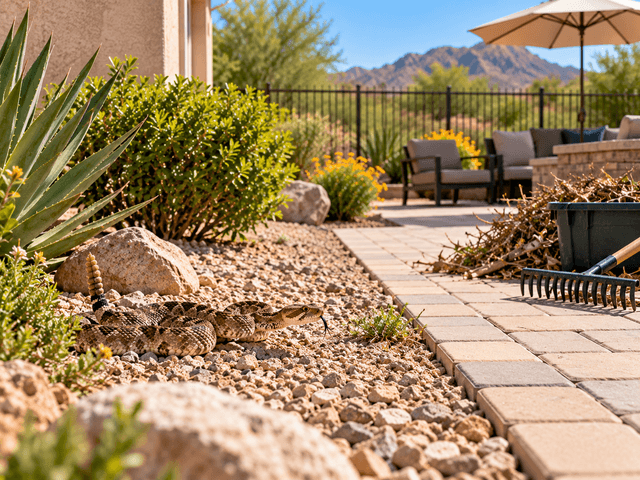
If you live in the foothills and want to know how to keep rattlesnakes out of your yard, the honest answer is that you can't make any yard 100% snake-free — but you can make it far less inviting. Rattlesnakes come for three things: food (rodents), water, and shelter (cover and warmth). Take those away with smart landscaping, exclusion fencing, and regular cleanup, and most snakes move on to easier ground. Below is a practical, foothill-specific plan for Glendale, La Crescenta, La Cañada, and nearby hillside neighborhoods — plus where a licensed landscape contractor fits in.
when do you need rattlesnake-proofing?
You should take rattlesnake deterrence seriously if your property backs onto open space, a hillside, a wash, or chaparral, and especially if you have children or pets. Foothill yards along the wildland edge see the most snake activity from spring through fall, when snakes are hunting and warming themselves. If you've already spotted a snake, found shed skins, or have a rodent problem, those are clear signals it's time to change the yard — snakes follow their prey, so a yard full of mice and gophers is a yard that attracts snakes.
What does rattlesnake-proofing a yard actually involve?
Rattlesnake-proofing is really two jobs working together: removing what attracts snakes, and physically blocking the areas you most want to protect. It isn't about poisons or a single gadget — it's about changing the habitat and installing proper exclusion fencing where it counts, such as around a play area, pool deck, or the main yard.
Rattlesnake exclusion fencing
The most reliable physical barrier is a dedicated snake fence: solid material or fine (roughly quarter-inch) galvanized mesh, at least three feet tall, with the bottom edge flush to the ground or buried a few inches so snakes can't push underneath. Mesh should angle slightly outward at the top, gates must be self-closing with no gap at the base, and the fence line has to stay clear of rocks, mulch, or soil that could let a snake climb or slip under. This kind of exclusion work is part of the fencing and specialty yard services BuildCal provides, and it's usually combined with a cleanup of the surrounding ground.
Habitat and cover removal
Fencing only works when the yard behind it stops offering shelter. That means clearing the hiding spots snakes rely on: woodpiles, rock and debris piles, dense low ground cover, ivy, tall grass, and the gaps under sheds, decks, and AC units. Keeping shrubs trimmed up off the ground, opening space between plantings, and maintaining a tidy, well-pruned yard all reduce the cool, covered spots a rattlesnake looks for. Ongoing landscape design and maintenance keeps that openness from growing back over a season.
How do you make a foothill yard less snake-friendly?
A few measures do most of the work. The goal throughout is to deter snakes and make the yard unattractive — not to exterminate a species that also helps control the rodents you don't want.
- Cut off the food supply. Rodents are the number-one draw. Remove rodent harborage, secure trash and pet food, and rethink bird feeders, which scatter seed that feeds mice. For a poison-free approach to the burrowing rodents common here, see our guide on getting rid of gophers in a California yard.
- Remove cover and clutter. Clear brush, leaf litter, and piles; seal gaps under structures; and keep a maintained buffer between any wild hillside and your living space.
- Use open, low-cover surfaces near the house. A band of gravel, decomposed granite, or paving around the home gives snakes nowhere to hide and makes them easy to spot. Our comparison of decomposed granite vs. gravel vs. pavers can help you choose.
- Coordinate with fire-wise clearing. In the foothills, the same brush removal that creates defensible space also removes snake cover. Our overview of fire-wise landscaping and defensible space explains how to do both at once.
- Manage water. Fix leaks, empty standing water, and avoid dense, constantly damp plantings against the house, which draw both rodents and snakes.
Who typically needs this work?
This is mainly a concern for foothill and hillside homeowners along the wildland edge in Glendale, La Crescenta, La Cañada, Tujunga, and similar San Gabriel and San Fernando Valley communities. Families with young children, dog and cat owners, and anyone with a pool, play structure, or vegetable garden benefit most from exclusion fencing around those specific zones. HOAs and property managers with hillside-adjacent common areas also use habitat cleanup and perimeter fencing to reduce risk for residents.
What to check before starting your landscaping project
- Does your property border open space, a hillside, a wash, or chaparral?
- Are there woodpiles, rock piles, dense ground cover, or debris that give snakes shelter?
- Do you have an active rodent problem (gophers, mice, rats) feeding the food chain?
- Are there gaps under gates, sheds, decks, or fences a snake could pass through?
- Which zone most needs protection first — play area, pool deck, garden, or the whole perimeter?
- Is your current fence flush to the ground, or are there openings along the bottom?
Deterrence measures compared
| Measure | When you'd use it | Key considerations | Notes before starting |
|---|---|---|---|
| Exclusion (snake) fencing | Protecting a play area, pool, garden, or full perimeter | Fine mesh, 3 ft+ tall, flush/buried base, self-closing gates | Most effective physical barrier; must be installed with no gaps |
| Habitat & cover removal | Any foothill yard with piles, brush, or dense ground cover | Clears woodpiles, debris, ivy, and gaps under structures | Needs ongoing maintenance so cover doesn't return |
| Rodent-source reduction | Yards with gophers, mice, or heavy bird feeding | Remove harborage and food; no rodenticides | Poisons risk secondary poisoning and don't solve the draw |
| Gravel/DG/paved buffer | Open band around the home and walkways | Low cover, easy to spot snakes, low upkeep | Pairs well with fire-wise defensible space |
What mistakes make a yard more snake-prone?
- Leaving woodpiles, rock piles, and debris as ready-made snake shelter.
- Using rodenticides, which can cause secondary poisoning and still leave the rodent attraction in place.
- Installing a decorative fence with gaps under the gate or along the base that snakes slip through.
- Planting dense, low ground cover or ivy right against the house.
- Ignoring an active rodent problem — the single biggest magnet for snakes.
- Treating deterrence as a one-time job instead of maintaining the yard each season.
How does BuildCal help you?
BuildCal is a licensed landscape contractor (California State License Board / CSLB) based in Glendale, working throughout the foothill communities most affected by this. For rattlesnake deterrence, that means two things we actually do: install proper exclusion fencing around the zones you want protected, and clean up and redesign the yard so it stops offering food, water, and shelter. Work starts with an on-site assessment of your grade, cover, fence lines, and problem areas, followed by a written estimate and scope before anything begins. We'll also tell you plainly where our work ends: if there is a snake on your property right now, that's a job for a licensed wildlife or snake-removal professional, not a landscaper.
An important safety note
Never try to handle, trap, or kill a rattlesnake yourself. Give it distance and let it move on, and call a licensed wildlife or snake-removal service if one takes up residence. A rattlesnake bite is a medical emergency — call 911 or Poison Control immediately, and keep children and pets well clear.
Steps to request your project from BuildCal
- Share a few photos of your yard, fence lines, and any problem areas, with a short description of your concern.
- Schedule an on-site assessment of the grade, cover, access points, and wildland edge.
- Receive a written estimate with scope, materials, and timeline.
- Approve the plan and schedule the fencing and cleanup work.
- Installation and a final walkthrough, with notes on keeping the yard snake-resistant.
Frequently asked questions about rattlesnake-proofing your yard
Can you really keep rattlesnakes out of a yard completely?
No honest contractor will promise a 100% snake-free yard, and you should be cautious of anyone who does. What you can do is make your property far less attractive and physically harder to enter. A combination of proper exclusion fencing, habitat and cover removal, and rodent-source reduction dramatically lowers the odds of a snake settling in. Think of it as strong deterrence for a foothill yard, not a guarantee.
Does snake fencing actually work?
Yes, when it's built correctly. Effective rattlesnake fencing uses solid material or fine mesh, stands at least three feet tall, sits flush to the ground or is buried slightly, and has self-closing gates with no gap underneath. The weak points are almost always gaps at the base, openings under gates, or rocks and mulch that let a snake slip through. Proper installation and keeping the fence line clear are what make it reliable.
Why shouldn't I just use rodent poison?
Rodenticides create more problems than they solve. Poisoned rodents can cause secondary poisoning in pets, owls, hawks, and other predators, and dying rodents in the yard can actually draw snakes in. More importantly, poison doesn't remove the underlying attraction. Reducing harborage, securing food sources, and using non-toxic rodent control — as covered in our gopher guide — is the safer, more lasting approach.
Which parts of the yard should I protect first?
Start with the areas where people and pets spend the most time and where a surprise encounter would be most dangerous: play areas, pool decks, patios, and vegetable gardens. Many foothill homeowners fence these specific zones first, then address the full perimeter. During an on-site assessment we help you prioritize based on your property's layout and how close it sits to open space.
When are rattlesnakes most active around Glendale and La Crescenta?
In Southern California's foothills, rattlesnakes are generally most active from spring through fall, when temperatures are warm and they're hunting rodents and seeking places to warm up. Activity can occur on mild days in other seasons too. Because they follow their prey, the best long-term defense is a yard that doesn't feed or shelter rodents in the first place — which is why deterrence is a year-round landscaping habit, not a seasonal one.
Do you remove snakes if we find one?
No — that's outside what a landscape contractor should do. BuildCal installs exclusion fencing and handles the cleanup and landscaping that make your yard less snake-friendly, but an actual snake on your property should be handled by a licensed wildlife or snake-removal professional. If someone is bitten, treat it as a medical emergency and call 911 or Poison Control right away.
Request your estimate today
If you're rattlesnake-proofing a foothill yard in Glendale, La Crescenta, La Cañada, or the greater Los Angeles area, send BuildCal a few photos of your space to schedule an on-site assessment and get a written estimate before any work begins. Call (818) 303-1570 or request your free estimate online, and we'll help you make your yard a lot less inviting to snakes.
Thinking about a new outdoor space?
We’d love to hear your ideas. Let’s explore what’s possible—no pressure, just a friendly conversation.
Give us a call:
+1 (818) 303-1570
Frequently Asked Question
HOW DOES THE DESIGN PROCESS WORK?
While the process may vary depending on the designer, the client’s needs, and the complexity of the project, most residential design projects include the following:
Initial Consultation, This is a chance to meet the designer and review the requirements and objectives of the project. Many designers charge for this visit, so to get the most out of the experience, ask the designer the best way to prepare and be sure you understand exactly what will be covered at this meeting.
Concept Plan. After listening to your ideas and priorities, the designer analyzes the site’s character, strengths and problems, and then develops one or more alternative concept plans for review.
Master Plan. The final master plan represents the culmination of your choices with the designer, and typically includes a complete spatial layout for your outdoor living spaces and other hardscape or architectural concepts.
Planting Plan. This is a working drawing from which the garden will actually be planted, and includes botanical names, container sizes, specific plant locations, and planting instructions to the contractor.
Additional Plan Documents. Depending on the scoop of your project, your designer may also provide a lighting plan, specialized guidelines on planting or irrigation, or notes and sketches on design elements such as water features or furniture and accessories placement.
Installation Assistance Many landscape designers will assist you in soliciting and reviewing construction bids, including referring contractors appropriate for your project. Others may choose to provide drawings only. Designers often stay involved throughout the installation phase to advise on design modifications, material selections and purchase and placement of garden art and accessories.