
OUR MISSION IS TO TAILOR FOR EACH CLIENT A BEAUTIFUL, FUNCTIONAL AND ENDURING OUTDOOR ENVIRONMENT THAT WILL PROVIDE A PLACE OF SERENITY FOR FRIENDS AND FAMILY TO APPRECIATE FOR YEARS TO COME.

BuildCal Landscape Landscape & Hardscape Article
Bare, Eroding Slope Dropping Dirt Every Rain? How to Stabilize and Plant It in SoCal
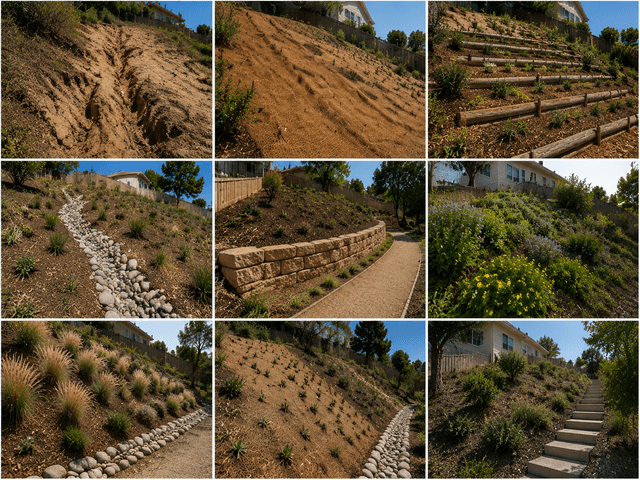
Every rainy season it happens: a bare slope sheds mud into the yard, across the driveway, down the walkway, or onto the neighbor's property, and by spring the hillside looks worse than before. The instinct is to dump more mulch or scatter seed on top, but that rarely holds, because the real driver is water — where it concentrates, how fast it moves, and whether the soil can absorb it. Learning how to stop hillside erosion SoCal homeowners face means looking at runoff, soil, slope angle, drainage, plant establishment, and access together, in that order. This guide walks through the practical toolkit — controlling runoff first, then surface protection like jute netting or hydro-seeding, deep-rooted ground cover, and light terracing — while being honest that a steep or failing slope may need drainage design, retaining, or engineering review. A durable fix usually combines several of these, not one quick patch.
How to Stop Hillside Erosion on SoCal Slopes
The most reliable way to stop hillside erosion is to control concentrated runoff first, then protect exposed soil and establish plants suited to the slope. Inspect downspouts, roof drainage, irrigation, low spots, and the direction of stormwater. Add surface stabilization such as mulch, fiber matting, or erosion-control netting where appropriate, and use deep-rooted ground cover or other hillside planting to reinforce the soil over time. Steeper or actively moving slopes may require engineered drainage, retaining elements, or review by qualified professionals.
Why Do Bare Slopes Erode So Quickly in Southern California?
A bare slope has little to slow falling rain or hold loose soil in place. During a dry season, the surface may become hard and separated, while seasonal storms can send water across the grade in concentrated channels. Newly graded soil, construction fill, burned or cleared areas, sparse planting, and compacted ground are especially vulnerable because water cannot easily infiltrate or spread across the surface.
What Does Slope Erosion Control Involve?
Slope erosion control is a sequence of actions that reduces water speed, spreads runoff, protects the soil surface, and establishes long-term plant coverage. It may include regrading a small area, correcting a downspout outlet, adding a swale or drain, improving soil, applying mulch, installing an erosion-control blanket, planting ground cover, or building a low terrace.
The final solution should fit the slope's grade, soil, exposure, maintenance access, and intended use. A gentle residential bank may need planting and surface protection. A steep grade beside a foundation, road, or retaining wall deserves a more careful drainage and stability assessment. Because concentrated water is the usual culprit, understanding why runoff and grading cause washouts is the right starting point; this article focuses more specifically on planting, soft stabilization, and establishing vegetation.
Which Ground Cover for Slopes Helps Hold Soil?
The right ground cover for slopes should spread enough to protect exposed soil, tolerate the site's sun and water conditions, and remain manageable on the grade. Dense planting can reduce the impact of raindrops and slow shallow runoff, while roots help create a more stable soil network as plants mature. A single plant type is not always the best answer; a layered mix can provide coverage at different heights and seasons. Choosing climate-appropriate, drought-tolerant plants keeps a slope covered without demanding heavy irrigation that a bank cannot absorb.
How Should Hillside Planting Be Planned?
Hillside planting works best when the plants, soil, irrigation, drainage, and maintenance plan are designed together. Begin with the exposure: a south-facing slope may dry quickly, while a north-facing area may stay cooler and wetter. Check whether the soil is shallow, compacted, rocky, sandy, or mixed with construction fill. These conditions influence plant establishment and the amount of surface preparation needed. For lower-upkeep options that establish reliably, compare the best low-maintenance plants for a Glendale garden before finalizing the palette.
Does Jute Netting on a Slope Really Help?
Jute netting slope applications can help protect freshly prepared soil while plants establish, particularly on a gentle or moderate grade where the netting can be installed in firm contact with the surface. It helps reduce the movement of loose soil from raindrop impact and shallow runoff. The netting is not a substitute for drainage, and the installation must follow the product's use, anchoring, overlap, and maintenance requirements.
When Is Hydro-Seeding a Hillside Appropriate?
Hydro seeding hillside work applies a mixture of seed, water, fiber, and other specified ingredients to cover a prepared area. It can help establish vegetation across a broad slope more evenly than hand-seeding, but success depends on seed selection, soil preparation, moisture, weather, slope condition, and protection from erosion before germination.
Can Light Terracing Stabilize a Residential Slope?
Light terracing can break one long slope into shorter sections, reduce runoff speed, create planting pockets, and make maintenance more practical. It might use small grade transitions, contour edging, shallow swales, or low landscape elements rather than a large retaining wall. The approach should be designed around drainage and soil movement; a terrace that traps water can make erosion worse, which is one reason it helps to recognize how retaining walls fail when drainage is neglected.
A properly built hardscape feature depends on what happens beneath the visible finish: grading, drainage, base preparation, compaction, reinforcement where required, and safe water discharge. BuildCal's hardscape services may be relevant when erosion work includes retaining elements, steps, walkways, pavers, walls, or drainage improvements.
What to Check Before You Start a Hillside Erosion Project
- Trace the water: Follow roof runoff, downspouts, irrigation, driveway drainage, and upper-yard flow before disturbing the slope.
- Document the movement: Photograph rills, gullies, exposed roots, muddy deposits, cracks, pooling, and changes after storms.
- Review the grade: Note steep sections, transitions, low points, unstable edges, retaining walls, stairs, paths, and access limitations.
- Test the soil: Consider compaction, fill, rock, drainage, soil depth, organic matter, and whether roots can establish.
- Choose the stabilization level: Compare planting, mulch, jute netting, hydro-seeding, contour work, drainage, terracing, and retaining elements.
- Protect the toe: Make sure water and soil are not collecting against a foundation, patio, wall, driveway, or neighboring property.
- Plan maintenance: Include irrigation checks, weed control, replanting, pruning, netting inspection, and post-storm reviews.
- Confirm approvals: Check city, HOA, utility, grading, drainage, tree, and structural requirements before work begins.
Which Stabilization Approach Fits Different Slope Conditions?
| Project type | Typical scope of work | Permit or HOA approval usually required? | Key considerations |
|---|---|---|---|
| Gentle bare bank | Soil preparation, ground cover, mulch, irrigation, and light surface protection | Often depends on grading, trees, drainage, and HOA rules | Plant establishment and coverage gaps must be managed after installation |
| Moderate planted slope | Layered hillside planting, contour layout, jute netting, drip irrigation, and drainage review | May vary with grading, drainage, structures, and property conditions | Netting helps temporarily; plants and water control provide the longer-term system |
| Broad open hillside | Soil preparation, hydro-seeding, fiber or blanket protection, access planning, and follow-up care | Depends on grading, drainage, slope, access, and local requirements | Seed needs protection until roots establish; a generic lawn mix may not fit |
| Steep or actively failing slope | Drainage, terracing, retaining elements, structural review, planting, and phased stabilization | Professional and city or HOA review may apply | Do not rely on mulch or planting alone where soil movement threatens structures |
What Mistakes Make Hillside Erosion Worse?
The most common mistake is treating the visible dirt instead of the water that moves across it. Adding more soil, mulch, or seed over a concentrated drainage outlet may hide the problem briefly but will not stop the next storm. Another mistake is installing plants with high irrigation needs on a slope that cannot absorb the water without runoff.
How Do You Choose a Slope Stabilization Contractor?
Choose a licensed landscape or hardscape contractor who asks where water comes from, where it goes, how the soil is moving, and what the slope must support after installation. Request a site visit, a clear diagnosis, an itemized scope, and a plan for plant establishment and post-storm inspection. If the project involves a structural wall, significant grading, utilities, or a hazard, ask which qualified professionals will be involved and review how wall height and surcharge affect permit requirements early.
How BuildCal Landscape Helps With Slope Stabilization and Planting
BuildCal can help homeowners coordinate planting, irrigation, ground cover, grading, drainage, mulch, erosion-control materials, steps, walkways, walls, pavers, and ongoing landscape maintenance. Its landscaping services in Los Angeles and nearby communities can support a planting-led solution when the slope is suitable for vegetation, while its hardscape team can evaluate related retaining or access work.
Steps to Start Your Slope Stabilization Project With BuildCal
- Schedule a slope stabilization consultation. Share photographs, storm damage, drainage concerns, slope use, and any plans for planting or hardscape.
- Assess the site. Review soil, grade, runoff, sun exposure, irrigation, structures, utilities, access, existing plants, and signs of movement.
- Compare stabilization options. Discuss ground cover, hillside planting, jute netting, hydro-seeding, drainage, light terracing, retaining work, and phasing.
- Confirm approvals and coordination. Identify city, HOA, utility, arborist, structural, grading, and drainage requirements where applicable.
- Install and maintain. Prepare the soil, control water, install protection and plants or hardscape, test irrigation, and schedule follow-up care.
Frequently Asked Questions About Hillside Erosion in SoCal
How Do I Stop Hillside Erosion in a SoCal Yard?
To understand how to stop hillside erosion SoCal homeowners face, begin by tracing concentrated runoff from roofs, downspouts, driveways, irrigation, and upper grades. Then protect exposed soil and establish suitable plants with appropriate watering. Mulch, fiber blankets, jute netting, contour work, or light terracing may help on suitable slopes. Steep or actively failing grades may need drainage design, retaining elements, engineering, or other professional review.
What Is the Best Ground Cover for Slopes?
The best ground cover for slopes depends on sun, soil, water, grade, wind, mature size, root behavior, and access for maintenance. Dense, climate-appropriate plants can protect the surface and help roots hold soil as they establish. No ground cover can correct a concentrated downspout or unstable retaining condition by itself. Pair planting with water control, soil preparation, and a plan to fill gaps after installation.
Does Jute Netting Work on a Slope?
A jute netting slope installation can temporarily protect prepared soil from raindrop impact and shallow runoff while plants establish. It must be installed tightly, anchored correctly, and paired with drainage and planting. Jute netting will not stop water concentrated from a downspout or repair a failing slope. Inspect it after storms for lifted edges, exposed soil, undercutting, and areas where runoff is bypassing the protection.
Is Hydro-Seeding a Hillside Better Than Planting?
Hydro seeding hillside coverage can be useful on a broad, accessible slope that has been prepared for seed and can be protected during germination. It may provide even coverage, but seed can wash away if drainage and surface protection are inadequate. Hand-planted plugs or container plants may provide more control on a smaller residential bank. The appropriate choice depends on the slope, seed mix, soil, weather, irrigation, access, and maintenance plan.
Can Plants Alone Stabilize a Steep Hillside?
Plants alone may help a gentle or moderate slope, but they are not always sufficient for a steep or actively moving hillside. Vegetation needs time to establish, and roots cannot correct a major drainage discharge, unstable fill, undercut edge, or failing retaining wall. A site assessment should determine whether planting can be paired with netting, drainage, contour work, terraces, or structural stabilization before the slope is replanted.
Does Slope Stabilization Require a Permit in Glendale?
Permit requirements for slope stabilization in Glendale can vary with grading, drainage, retaining walls, stairs, structures, utilities, property location, and project scope. HOA approval may also apply. Confirm current requirements with the relevant city department and HOA before construction. A contractor should identify which work is landscape-related and which requires an arborist, structural professional, engineer, utility coordinator, or other qualified specialist.
Start Your Slope Stabilization Plan Today
If you need to understand how to stop hillside erosion SoCal homeowners face in Glendale, Los Angeles, or a nearby Southern California community, contact BuildCal Landscape for a slope stabilization consultation or call +1 (818) 303-1570. BuildCal can help you evaluate runoff, soil, planting, netting, drainage, terracing, and hardscape before the next storm exposes the same problem again.
Thinking about a new outdoor space?
We’d love to hear your ideas. Let’s explore what’s possible—no pressure, just a friendly conversation.
Give us a call:
+1 (818) 303-1570
Frequently Asked Question
HOW LONG DOES A PROJECT USUALLY TAKE?
Every property and client is different and therefore there is no set standard. The time required to complete a project relies completely on the amount of work which will be necessary. And the size of a property is not always a guide. For instance; a large property requiring minimal landscaping and irrigation installation will most likely be completed in a shorter amount of time than a small property requiring landscaping, a patio, spa, and a custom water fountain. Once a preliminary estimate is prepared, we will have a realistic estimate for project completion